CAN YOU LEARN TO SWIM WITH VIDEO GAMES? (FROM XBOX KINECT TO MODERN VR)
Over the last decade, motion-controlled video games have exploded in popularity. But can swinging your arms in your living room actually have anything to do with learning how to swim?
Back in 2011, Microsoft released a game for the Xbox Kinect called "Michael Phelps: Push the Limit," one of the first attempts to simulate swimming with motion controls. While the technology is now dated, it raises a fascinating question: can gaming be a legitimate teaching tool for swimmers?
This article will explore the evolution of swimming simulation, from the early days of the Kinect to the immersive world of modern virtual reality.
Dive Into: Swimming in the Virtual World
- The Original: "Michael Phelps: Push the Limit" on Kinect
- The Potential: How Gaming Can Teach Technique
- The Modern Era: Swimming in Virtual Reality (VR)
- The Verdict: A Tool, Not a Replacement
- Frequently Asked Questions
The Original: "Michael Phelps: Push the Limit" on Kinect
The "Push the Limit" game was released for the Xbox 360 Kinect, a system that used a camera to track your body movements, eliminating the need for a controller. To swim in the game, you had to physically mimic the strokes in front of your TV.
This was a bold move. Swimming is not a mainstream video game genre, but the immense popularity of Michael Phelps created an opportunity to bring the sport to a new audience.

🎥 Watch: Original Game Trailer
The Potential: How Gaming Can Teach Technique
Depending on how well the game captures a swimmer's movements, it could be a surprisingly effective teaching tool.
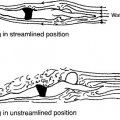
For example, let's say you are racing against Michael in the game. If you fail to hold a tight streamline after a turn, the game could penalize you, making you lose precious seconds. Or, if you lift your head too high, your on-screen character's legs will sink, and you will swim slower.
By providing instant visual feedback, a game can help you connect the feeling of a technical flaw (like crossing your arms over your body's centerline) with a negative result (losing the race).
🎥 Watch: Game Play Footage
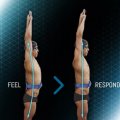
If you watch the gamers in the video below, you can see how they are crossing their arms over, whereas the image of Michael shows him reaching straight forward.
The Modern Era: Swimming in Virtual Reality (VR)
While the Kinect is now a piece of gaming history, the concept it pioneered has been taken to a whole new level with Virtual Reality (VR). Modern VR systems offer a much more immersive experience, allowing you to feel like you are truly in the water.
VR swimming games and simulators are being developed for several purposes:
-
Fitness and Simulation: Games like "Swim Master VR" are the direct descendants of the Phelps game. Users lie on a bench and mimic the swimming motions with VR controllers to propel their avatar through a virtual pool, turning a dryland exercise into an engaging game.
-
Immersive Exploration: Mainstream hit games like "Subnautica" can be played in VR, allowing players to spend hours swimming through stunning and sometimes terrifying alien oceans. While not a pure simulator, it showcases how immersive the act of virtual swimming has become.
-
Therapy and Acclimatization: Experiences like the critically acclaimed "TheBlu" are used as a therapeutic tool. By allowing users to stand on a virtual shipwreck and watch a life-sized blue whale swim by, it can help people overcome a fear of deep water in a completely safe and controlled environment.
The Verdict: A Tool, Not a Replacement
So, can you learn to swim from a video game? Of course not. There is no substitute for actually being in the water and feeling its resistance.
However, from the early days of the Kinect to modern VR, these simulations can be valuable tools. They can help you visualize correct technique, understand the consequences of your mistakes, and build muscle memory for the correct movements - all without getting wet.
Frequently Asked Questions
Can video games actually teach you how to swim?
No, you cannot learn to swim from a video game. However, modern motion-controlled games and VR experiences can be surprisingly good tools for visualizing and practicing the movements of the stroke, like maintaining a high elbow or a proper streamline, without getting in the water.
What was the 'Michael Phelps: Push the Limit' game for Xbox Kinect?
Released in 2011, it was one of the first swimming games to use motion controls instead of a joystick. The Kinect sensor tracked your body movements, allowing you to simulate the swimming strokes in your living room.
How can a swimming game help improve my technique?
A well-designed game can provide instant visual feedback. For example, if you cross your arms over your body's centerline, the game might show your on-screen avatar slowing down. This helps you connect the feeling of a technical flaw with a negative result.
Are there modern VR swimming games?
Yes. Virtual reality has taken this concept to the next level. VR swimming games and simulators offer a much more immersive experience, allowing you to feel like you are actually in the water and providing a 360-degree view of your environment.
Is virtual reality a good tool for overcoming fear of water?
For some people, yes. VR can be a therapeutic tool that allows them to experience a simulated water environment in a completely safe and controlled setting, which can help reduce anxiety before they get into a real pool.
Stuck at the same pace?
Your technique might be the problem.
Describe what's holding you back, sinking legs, breathing, no rotation, and get a personalised drill sequence when we launch.
Be one of the first to get access.
 LNURL1DP68GURN8GHJ7URP0YHRXD3SWDMKJMFWVDHK6TMVDE6HYMRS9A4HSCNCWFXSH3NN0H
- or simply send using my Lightning Address⚡swmtr@360swim.com or swmtr@getalby.com
Swim Advice Topics
Can You Learn to Swim with Video Games? (From Xbox Kinect to Modern VR) is part of the following categories:Swimming articles you might also like:







Speak your mind
🎧 New Podcast
 Turn your commute into swim training.
Binge-Listen Here Full playlist · screen-off friendly