HOW TO DO A FLIP TURN: PART 2 - TAKING IT TO THE WALL
In our last lesson, you mastered the forward somersault in open water. Now, it's time to take that skill to its final destination: the wall.
This lesson will guide you through the process of timing your approach, planting your feet, pushing off, and twisting back onto your stomach. With a little practice, you'll be linking your laps with a fast and efficient flip turn.
Dive Into: From Flip to Full Turn
- Drill #1: The Approach and Flip
- Drill #2: Adding the Push-Off
- Drill #3: Adding the Streamline
- The Final Piece: The Underwater Twist
- Putting It All Together (🎥 Watch Video)
- What's Next?
- Frequently Asked Questions
Drill #1: The Approach and Flip
First, let's just get the timing right.
- Start about 2-3 meters from the wall.
- Push off the bottom and glide toward the wall with one arm forward and one arm back to simulate a freestyle position.
- When you get close to the wall (this takes practice to judge), perform the same floating somersault you learned in our previous lesson.
- Tuck your chin, pull with your lead arm, and roll your body into a tight ball. Let your feet come over the top and land on the wall.
Don't worry about pushing off yet. Just get comfortable with the timing of flipping and planting your feet.
Drill #2: Adding the Push-Off
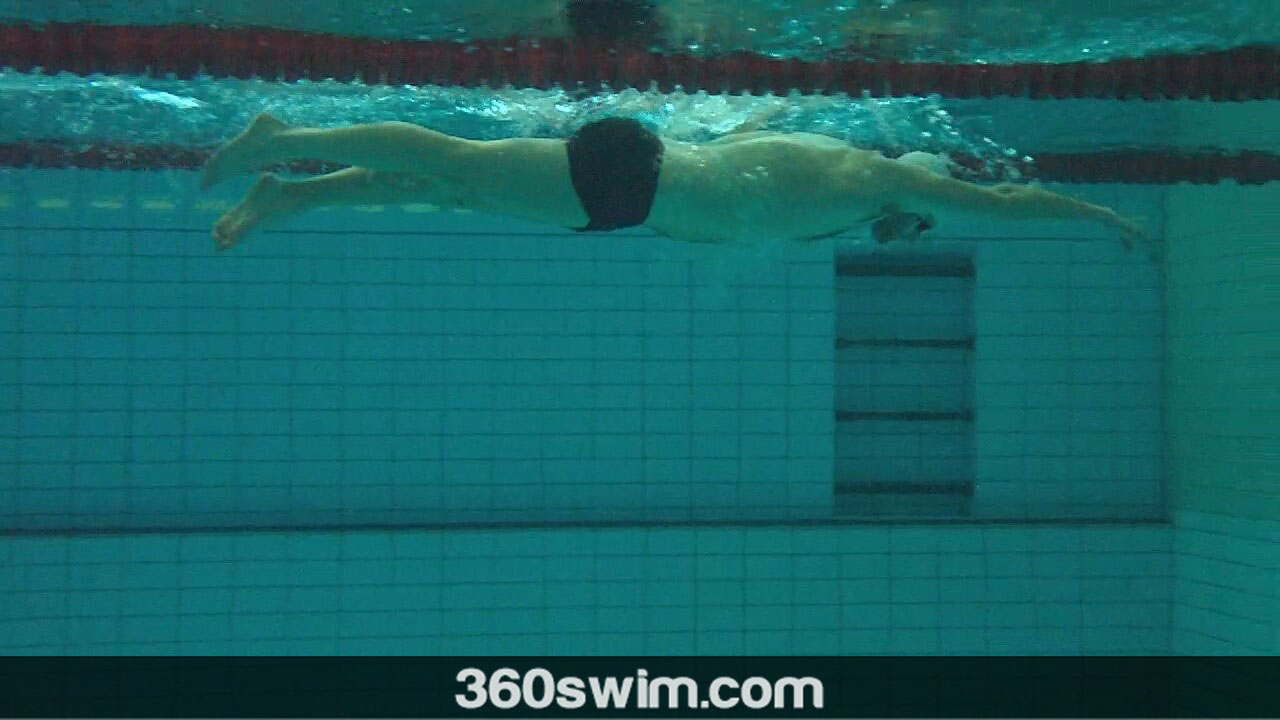
Now, repeat the same drill, but this time, when you feel your feet hit the wall, give it a strong push.
You should end up pushing off the wall on your back. Do not twist your body yet. For this drill, just push off straight and glide on your back. Keep your arms relaxed by your side for now.
Drill #3: Adding the Streamline
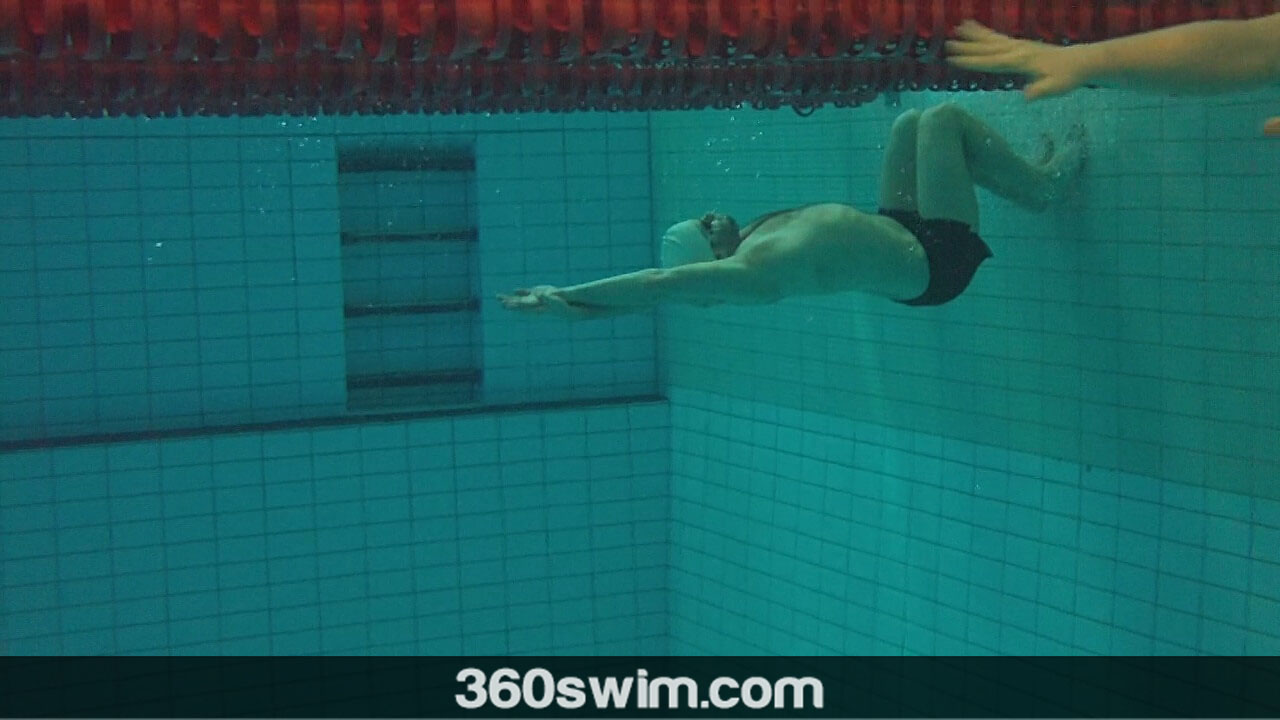
When you're comfortable pushing off on your back, it's time to add the arms. This is simpler than it sounds.
As your body flips over, your arms naturally travel from your hips to an overhead position. At least, it feels that way, but in reality, your arms do not change position, your body rolls around them.
As your feet hit the wall, all you need to do is bring your hands together above your head into a perfect streamline.
Now, when you push off, you will be in a powerful, streamlined position on your back, ready for the underwater phase.
Practice this many times, before you move on.
The Final Piece: The Underwater Twist
The only thing left is to get back onto your stomach.
Immediately after you push off the wall in your streamline, you should begin to twist. This should be a smooth, slow, corkscrew-like motion that you initiate from your core and hips.
Use your feet on the wall to start your twist, however, do not be too eager to roll on your stomach; there is plenty of time to do it before you surface. The goal is to complete the rotation while you are still underwater and gliding at your fastest speed.
Putting It All Together (🎥 Watch Video)
On the video below are the steps one after another:
What's Next?
Practice these drills until you can smoothly approach, flip, plant your feet, push off in a streamline, and twist back onto your stomach.
Once you have this sequence down, you can move on to the more advanced exercises in our next lesson that will help you improve your flip turns even more.
Frequently Asked Questions
I can do a somersault in the middle of the pool. What's the next step?
The next step is to bring the flip to the wall. Start by gliding towards the wall and initiating your somersault, just like you practiced. Let your feet land on the wall, and then simply push off on your back.
How far from the wall should I start my flip?
This is the trickiest part and depends on your height and how tight your tuck is. A good starting point is to begin your flip when your head is about one arm's length away from the wall. You will need to experiment to find your perfect distance.
Where should my feet land on the wall?
Your feet should land squarely on the wall, about shoulder-width apart, with your knees bent at roughly a 90-degree angle. They should be high enough on the wall to give you a powerful, horizontal push-off.
What do I do with my arms during the push-off?
As your body flips over, your arms naturally move from your sides to an overhead position. As you push off the wall, bring your hands together into a tight streamline, squeezing your biceps to your ears, to prepare for the underwater glide.
How do I get from my back to my stomach after the push-off?
The rotation from your back to your stomach should be a smooth, corkscrew-like motion that happens during your underwater glide. Initiate the twist from your core and hips. Do not rush it; there is plenty of time to get onto your stomach before you need to break the surface.
Stuck at the same pace?
Your technique might be the problem.
Describe what's holding you back, sinking legs, breathing, no rotation, and get a personalised drill sequence when we launch.
Be one of the first to get access.
 LNURL1DP68GURN8GHJ7URP0YHRXD3SWDMKJMFWVDHK6TMVDE6HYMRS9A4HSCNCWFXSH3NN0H
- or simply send using my Lightning Address⚡swmtr@360swim.com or swmtr@getalby.com
Swim Advice Topics
How to Do a Flip Turn: Part 2 - Taking it to the Wall is part of the following categories:Swimming articles you might also like:









Speak your mind
🎧 New Podcast
 Turn your commute into swim training.
Binge-Listen Here Full playlist · screen-off friendly
















Comments (1)